
Inlays & Onlays Treatment
- When tooth decay or damage is extensive, a simple filling may be unstable, fragile, or cause food to get trapped.
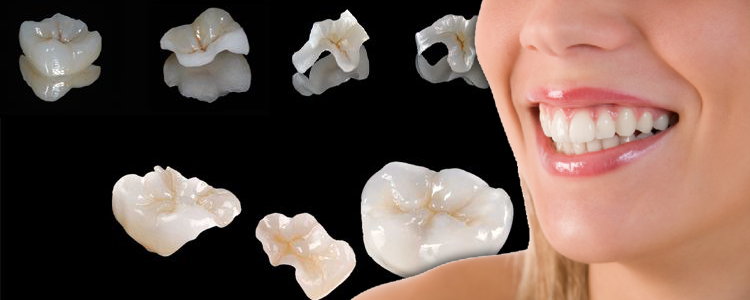
- Instead of placing a crown, the dentist may recommend an Inlay (covering one tooth surface) or an Onlay (covering a larger portion, sometimes the entire surface).
- Technique:
- The dentist prepares the tooth by cleaning out decayed tissue, similar to a normal filling.
- An impression of the tooth is taken and sent to the lab.
- Skilled technicians create a custom inlay or onlay that fits perfectly into the prepared cavity.
- The inlay/onlay is then bonded tightly to the tooth with special dental cement.
This method provides a stronger, longer‑lasting restoration compared to traditional fillings, while preserving more of your natural tooth structure.
Materials for Inlays & Onlays
Inlays and onlays are usually made from four types of materials:
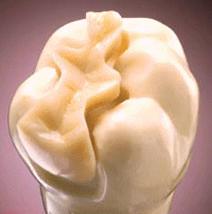
- Porcelain
A porcelain inlay/onlay is custom‑made to fit perfectly inside a prepared tooth. It is securely bonded to prevent further decay, stabilize the surrounding tooth structure, and looks completely natural.
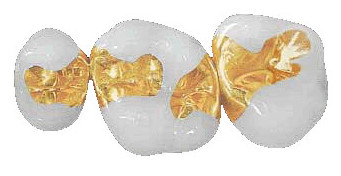
- Gold
Gold is an excellent choice due to its long‑term stability and high survival rate in the mouth. It often requires less tooth preparation compared to porcelain. The only drawback is its noticeable color.
- Composite
Composite resin inlays/onlays have a similar lifespan to porcelain. Many dentists prefer them because they are less abrasive than porcelain, making them gentler on opposing teeth.