

Root canal treatment
A root canal is a treatment used to repair and save a tooth that is badly decayed or becomes infected.
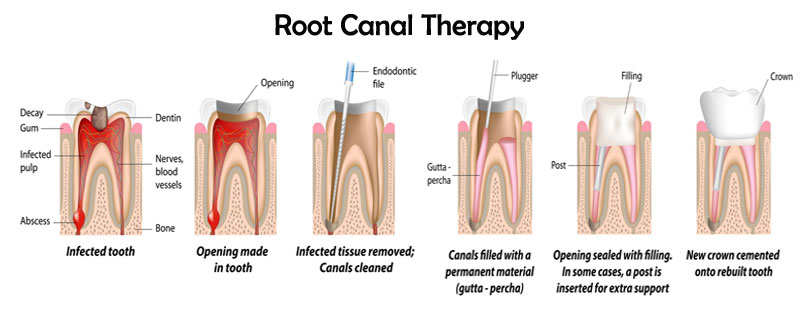
Root canal procedures are performed when the nerve of the tooth becomes infected or the pulp becomes damaged. During a root canal procedure, the nerve and pulp is removed and the inside of the tooth is cleaned and sealed. This prevents the tooth rot from being exposed, protecting your jaw from possible infection that can enter through the tooth.

The Root Canal Treatment Procedure
Tooth Evaluation
The first stage of an root canal procedure is for your dentist to carefully evaluate your tooth to ensure that endodontics is the best treatment option for you. Dental x-rays will form part of this evaluation process so that your dentist can look under the surface of your tooth to assess the bone and structures of the root.

Local Anaesthetic
After numbing your tooth with a local anaesthetic, your dentist will place a special cover over your tooth called a dental dam. This protects your airway whilst the endodontic treatment is being completed and also prevents saliva contaminating the tooth. Your dentist will then remove any filling in your tooth and use a special drill to expose the nerve. This will be entirely painless.
Root Cleansing
After numbing your tooth with a local anaesthetic, your dentist will place a special cover over your tooth called a dental dam. This protects your airway whilst the endodontic treatment is being completed and also prevents saliva contaminating the tooth. Your dentist will then remove any filling in your tooth and use a special drill to expose the nerve. This will be entirely painless.
Temporary Filling
Often your dentist will put a special antiseptic into your tooth and then put in a temporary filling. You will then wait a few days to have the root filling completed.
Root Filling
Finally, your dentist will place a special root filling material into your root canals and then put a filling in your tooth. It is often the case that your tooth will require extra protection from fracture and so often a crown or inlay/onlay will be the best way to achieve this protection in the longer term.

Signs You May Need a Root Canal
- Severe toothache when chewing or applying pressure
- Sensitivity or pain that lingers after exposure to hot or cold temperatures
- Darkening or discoloration of the tooth
- Swelling and tenderness in the gums around the tooth
- A recurring pimple‑like bump on the gums
- In some cases, no symptoms at all
